Can't Sleep But Not Tired? Tested Fix for 'Tired But Wired' (2026)
Exhausted all day but wide awake at night? The 'tired but wired' cause is specific. Tested fix and why it happens — updated 2026.
Allen Mckinney
Updated June 11, 2026
You dragged yourself through the entire day. Meetings, errands, responsibilities. Your body aches. Your eyes burn. All you want is to collapse into bed.
Then you lie down. And your brain turns on.
Racing thoughts. Tomorrow's tasks. That email you forgot to send. The weird thing your coworker said at lunch. Suddenly you are wide awake, staring at the ceiling, wondering why your body is exhausted but your mind refuses to shut off.
This is called the "tired but wired" phenomenon, and it is one of the most common sleep complaints in adults. You are not alone. Up to 33-50% of US adults experience insomnia symptoms on any given night (Medical News Today).
The good news: there is a specific, measurable reason this happens. And once you understand it, you can fix it.
Tired vs. sleepy: they are not the same thing
This is the key distinction that most people miss.
Tiredness is a subjective sense of physical depletion. Your muscles ache, concentration slips, you feel worn through. It is your body saying "I need rest."
Sleepiness is a specific neurological state where the brain's arousal systems dial down, allowing the transition to sleep. It is your brain saying "I am ready to sleep."
You can have one without the other. This is why someone can be completely exhausted, crawl into bed, and then lie wide awake. The body is depleted, but the brain has not entered the "sleep-permissive" state.
Why your brain overrides your body
Sleep is governed by two interacting systems:
- Process 1 (Sleep Pressure): The longer you are awake, the more adenosine builds up in the brain. This is your body's sleep gauge.
- Process 2 (Circadian Rhythm): Your internal clock, driven by light exposure, controls the 24-hour cycle of alertness and sleepiness.
When both align (high adenosine + circadian "night" signal), sleep comes easily.
But there is a third force: the stress response. When cortisol and adrenaline activate the brain's arousal circuits, they override both shutdown signals. Your adenosine may be sky-high, your body may be running on empty, but if the HPA axis is firing, the wake signal wins.
This is the "tired but wired" mechanism in a nutshell.
8 reasons you are tired but cannot sleep
1. Stress and anxiety
Up to 90% of anxious or depressed individuals have some form of sleep disorder. When external distractions disappear at night, the stress response takes center stage. The quiet of bedtime is when worry shows up.
2. Cortisol dysregulation
Your cortisol should peak in the morning and decline throughout the day. Chronic stress keeps it elevated into the evening, suppressing melatonin and maintaining alertness. Research shows that chronic insomniacs have measurably elevated nighttime cortisol (Vgontzas et al., 2001).
3. The "second wind" paradox
Pushing past your natural sleep window triggers a cortisol and adrenaline release. Being too tired actually makes it harder to fall asleep. Your body releases stress hormones to keep you functioning past your natural limit.
4. Conditioned arousal
After multiple nights of difficulty, your brain begins to associate the bed with frustration and wakefulness rather than rest. This creates a self-reinforcing loop: you worry about not sleeping, which activates your stress response, which keeps you awake.
5. Screen time and blue light
Screens emit blue light that suppresses melatonin production. Even 2 hours of evening screen time measurably disrupts the melatonin surge needed for sleep. And it is not just the light. The content keeps your brain engaged: news, social media, work emails.
6. Caffeine
Caffeine has a half-life of 2-10 hours depending on your metabolism. An afternoon coffee at 3 PM still has half its blocking power at 9 PM. It does not make you feel alert. It simply removes the sleepiness signal by blocking adenosine receptors.
7. Circadian misalignment
Irregular sleep schedules, shift work, jet lag, and weekend sleep-ins all desynchronize your internal clock. Your body may be exhausted but the clock has not yet sent the sleep signal.
8. Underlying conditions
Sleep apnea (80-90% of cases undiagnosed), restless legs syndrome, hormonal imbalances, and chronic pain can all produce the "tired but wired" state. If the strategies below do not help after 2-3 weeks, see a doctor.
What actually works: solutions ranked
Gold standard: CBT-I
Cognitive Behavioral Therapy for Insomnia is the first-line treatment recommended by the American Academy of Sleep Medicine, before medication. It consistently outperforms sleep medications in long-term outcomes with no rebound insomnia.
CBT-I includes:
- Stimulus control: Bed equals sleep only. If not asleep in 20 minutes, get up. Return when sleepy.
- Sleep restriction: Temporarily limit time in bed to rebuild homeostatic sleep pressure (uncomfortable but highly effective)
- Cognitive restructuring: Challenge catastrophic sleep thoughts ("If I do not sleep I will fail tomorrow")
High effectiveness (evidence-based)
- Morning light exposure: 10-30 minutes of bright light within 1 hour of waking. Anchors circadian rhythm, reduces nighttime cortisol.
- Consistent wake time: Same every day, including weekends. The single most foundational circadian habit.
- Exercise: Morning or afternoon, moderate aerobic. Reduces sleep latency, improves deep sleep. Avoid within 3 hours of bedtime.
- Stimulus control: Break the bed-wakefulness association. If you cannot sleep, get up.
Moderate effectiveness
- Progressive muscle relaxation
- Deep breathing (4-7-8 technique)
- Cool bedroom (65-68°F / 18-20°C)
- Warm bath or shower 60-90 minutes before bed
- Journaling or brain dump earlier in the evening
What does NOT work
- Alcohol: Fragments sleep in the second half of the night. Suppresses REM.
- Lying in bed longer: Weakens the bed-sleep association. Reinforces conditioned arousal.
- Forcing yourself to sleep: Activates monitoring and effort that sustains hyperarousal.
- Sleeping when you feel tired (no schedule): Weakens circadian rhythm and homeostatic pressure.
When to see a doctor
See a doctor if:
- Sleep problems persist beyond 2-3 weeks despite self-help efforts
- You regularly take more than 30 minutes to fall asleep despite feeling tired
- You wake up feeling unrefreshed most mornings
- A bed partner reports snoring, gasping, or restless movement
- You feel anxious or dread bedtime because of past sleep difficulty
- Fatigue does not improve with any amount of sleep
The formal criteria for insomnia disorder: difficulty initiating or maintaining sleep at least 3 nights per week for at least 3 months, with meaningful impact on daytime functioning.
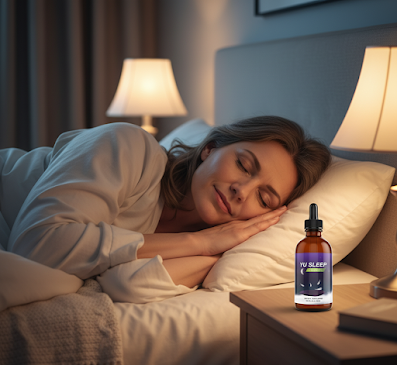
Tired but wired at night?
Yu Sleep calms the stress response that keeps you awake
Lemon balm + L-theanine blunt cortisol spikes. GABA + apigenin quiet racing thoughts. Low-dose melatonin reinforces the sleep window. 60-day guarantee.
Try Yu Sleep Risk-Free →Frequently Asked Questions
Why am I so tired but can't fall asleep at night?
Your body is tired (high adenosine) but your brain is in a state of hyperarousal (high cortisol). Stress hormones override the sleep pressure, keeping you awake despite physical exhaustion. This is the "tired but wired" phenomenon.
Can being too tired actually make insomnia worse?
Yes. Pushing past your natural sleep window triggers a cortisol and adrenaline release, creating a "second wind." Being overtired makes it harder to fall asleep, not easier.
Is "tired but wired" a sign of anxiety?
It can be. Up to 90% of anxious individuals have some form of sleep disorder. The quiet of bedtime amplifies anxious thoughts, which activate the stress response, which keeps you awake.
How do I stop feeling tired but wired at night?
Start with stimulus control (get up if not asleep in 20 minutes), morning light exposure, and consistent wake time. If these do not help within 2 weeks, consider CBT-I with a sleep specialist.
How long does it take to fix the tired but wired cycle?
Most people see significant improvement within 2-4 weeks of consistent changes. Stimulus control and consistent wake time are the fastest-acting interventions.
Why can I fall asleep on the couch but not in bed?
Conditioned arousal. Your brain associates the bed with wakefulness and frustration, but the couch has no negative sleep associations. The fix is stimulus control: use the bed only for sleep.
What causes hyperarousal at bedtime?
Chronic stress, screen time, caffeine, irregular schedules, and conditioned anxiety about sleep. The HPA axis (your stress command center) stays activated when it should be winding down.
How long should it normally take to fall asleep?
10-20 minutes is normal. Consistently taking more than 30 minutes suggests sleep onset insomnia or hyperarousal. Consistently falling asleep in under 5 minutes may indicate sleep deprivation.
Final verdict
The "tired but wired" state has a specific cause: your stress response overriding your sleep pressure. Understanding this changes how you approach the problem.
Stop trying to force sleep. Instead, calm the stress response. Morning light, consistent wake time, stimulus control, and if needed, a supplement that targets cortisol and racing thoughts.
Yu Sleep combines lemon balm, L-theanine, GABA, and apigenin specifically for this purpose. They do not sedate you. They calm the arousal that keeps you awake. 60-day guarantee.
Want to try the supplement mentioned in this article?
Try Yu Sleep — Risk-Free for 60 Days
9 clinically studied ingredients. Low-dose melatonin. Free shipping on 6-month orders.
Try Yu Sleep Risk-Free →Continue Reading
Why Do I Wake Up at 3 AM? 9 Tested Causes & Fixes (2026)
Waking up at 3 AM every night? Learn the 9 tested causes — from cortisol spikes to magnesium deficiency — and what actua...
How to Fall Asleep Faster: 15 Tested Methods That Work in 2026
Can't fall asleep? These 15 tested methods help you fall asleep in under 20 minutes — from the military technique to sup...
Best Natural Sleep Supplements 2026: Tested & Ranked
Which natural sleep supplement actually works? We tested 12 options — here are the top picks by ingredients, clinical ev...
Magnesium for Sleep: Which Form Works Best? Tested 2026 Guide
Not all magnesium is the same. Tested comparison of glycinate, citrate, threonate, and oxide for sleep — which form actu...