Finger Press for Sleep: Tested Acupressure Points (2026)
Pressing specific points on your hands, wrists, and feet may help you fall asleep faster. The tested acupressure points that actually work.
Allen Mckinney
Updated June 11, 2026
There is a pressure point on your wrist that, when pressed firmly for 2 minutes, can reduce anxiety and make you drowsy. It is called Heart 7, or "Spirit Gate" in Traditional Chinese Medicine. And there is actual science behind it.
A 2025 meta-analysis of 41 randomized controlled trials found that acupressure significantly improves sleep quality, total sleep time, and sleep efficiency across 3,680 subjects (Ling et al., Nursing & Health Sciences).
Another study found that acupressure at specific points increases natural melatonin production, the same hormone that supplements provide. Your body can make it on its own, with the right stimulation.
So no, this is not just ancient folklore. There is a biomedical mechanism, and it works.
The 6 best acupressure points for sleep
1. Heart 7 (HT7) — "Spirit Gate"
Location: Inner wrist crease, pinky-finger side, in the hollow next to the small bony bump.
How to find: Turn your palm up. Find the wrist crease. HT7 is at the outermost edge of the crease, on the side closest to your pinky finger.
Technique: Use your thumb or index finger. Apply gentle but firm pressure in circular motion for 1-3 minutes per side. Breathe deeply.
What it does: Calms the mind, reduces anxiety and overthinking, improves sleep quality. A 2019 study found HT7 effective for insomnia, psychological stress, and enhancement of parasympathetic nervous system activity.
2. An Mian — "Peaceful Sleep"
Location: Behind the ear, in the hollow between the mastoid bone and the base of the skull.
How to find: Place your finger on your earlobe. Slide backward into the depression just behind the earlobe, between the bone and skull.
Technique: Use index or middle finger. Apply gentle to moderate pressure in slow, circular motions for 2-3 minutes per side. Close your eyes and breathe deeply.
What it does: This point is literally named "Peaceful Sleep." It is an extra point not on the main meridians, whose primary function is sleep. It calms the mind, eases anxiety, and soothes the nervous system.
3. Yin Tang — "Third Eye"
Location: Center of the forehead, between the eyebrows, slightly above the nose bridge.
Technique: Use index or middle finger. Apply gentle, circular pressure for 1-2 minutes. Add deep breathing.
What it does: Calms an overactive mind. Particularly useful when racing thoughts keep you awake. A 2024 study found that 10 minutes of acupressure on Yin Tang for 3 consecutive nights reduced anxiety and improved sleep quality.
4. Pericardium 6 (PC6) — "Inner Frontier Gate"
Location: Inner forearm, about 3 finger-widths above the wrist crease, between the two tendons.
Technique: Use thumb to apply firm, steady pressure in circular motion for 1-2 minutes per side.
What it does: Calms the heart and reduces anxiety. Also treats nausea and headaches. Part of the "Buddha's Triangle" (HT7 + PC6 + LU9), historically used by monks to steady the mind during meditation.
5. San Yin Jiao (SP6) — "Three Yin Intersection"
Location: Inner leg, about 4 finger-widths above the inner ankle bone, just behind the tibia.
Technique: Apply deep pressure for 4-5 seconds, circular motion.
What it does: Full-body relaxation. Improves deep sleep duration, overall sleep quality, and REM duration.
Caution: Do NOT use during pregnancy. SP6 is associated with inducing labor.
6. KD1 — "Bubbling Spring"
Location: Sole of the foot, small depression that appears just above the middle of the foot when you curl your toes inward.
Technique: Lie on your back with knees bent. Curl your toes. Find the depression. Apply firm pressure with circular motion for a few minutes per foot.
What it does: Grounds your energy and induces sleep. It is the lowest point on the body where energy rises from the earth.
Step-by-step: 10-minute pre-bed acupressure routine
- Yin Tang (Third Eye): 1-2 minutes with deep breathing
- HT7 (Spirit Gate): 1-2 minutes on each wrist
- An Mian (Peaceful Sleep): 2-3 minutes behind each ear
- PC6 (Inner Frontier Gate): 1-2 minutes on each forearm
- Optional: SP6 or KD1 for full-body grounding
Do this in a quiet, dim environment. Combine with slow, deep breathing. Consistency matters, daily practice yields better results than occasional use.
The science: does acupressure actually work for sleep?
The 2025 meta-analysis analyzed 41 randomized controlled trials with 3,680 subjects. The results:
- Sleep quality: Significant improvement (SMD = -1.58)
- Total sleep time: Increased (SMD = 1.12)
- Sleep efficiency: Improved (SMD = 0.90)
- Sleep onset latency: Reduced (SMD = -0.73)
- Wake after sleep onset: Reduced (SMD = -1.32)
The biomedical mechanisms: acupressure activates small myelinated nerves in muscles, transmits stimulation to the spinal cord, midbrain, hypothalamus, and pituitary axis. It releases beta-endorphin and serotonin. And significantly, it increases serum melatonin (Chen et al., 2022).
Limitations: most studies are small (34-422 participants). Researchers note the need for more large, well-designed trials. But there is no evidence that acupressure decreases sleep quality, and the risk is essentially zero.
Which finger should you press with?
There is no single "magic finger" for sleep. The technique involves pressing specific POINTS on the body using your thumb or index finger.
For wrist points (HT7, PC6): use your thumb or index finger of the opposite hand.
For points behind the ear (An Mian): use your index or middle finger.
For the forehead (Yin Tang): use your index or middle finger.
The key is the POINT, not the finger. And the pressure should be firm but comfortable, not painful.
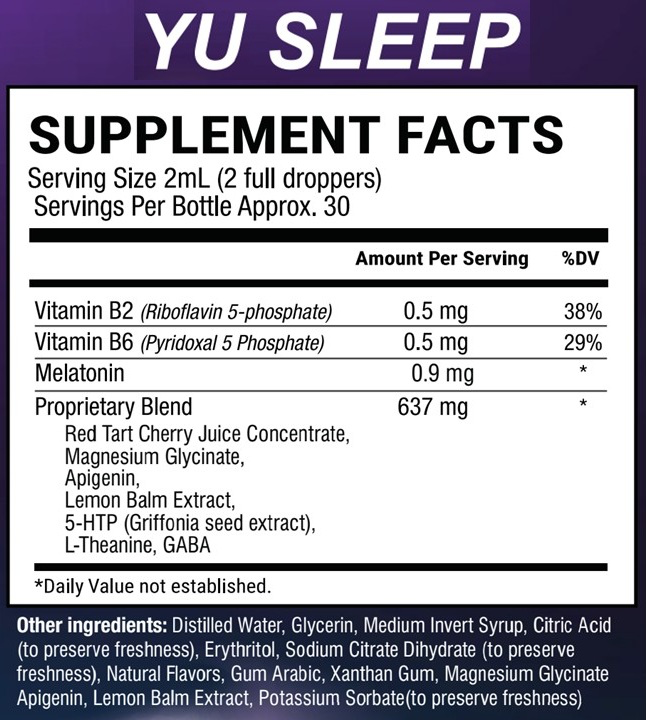
Want to enhance your acupressure routine?
Yu Sleep works with acupressure, not against it
Low-dose melatonin (0.9mg) + magnesium glycinate + calming herbs. Combine with your acupressure routine for maximum effect. 60-day money-back guarantee.
Try Yu Sleep Risk-Free →Frequently Asked Questions
Which finger should I press for sleep?
There is no single magic finger. Use your thumb or index finger to press specific acupressure points: HT7 on the wrist, An Mian behind the ear, Yin Tang between the eyebrows. The point matters more than the finger.
How long does acupressure take to work?
Most people feel drowsy within minutes of the routine. For best results, practice consistently for at least 2 weeks. The 2025 meta-analysis found benefits across studies of varying durations.
Is acupressure safe?
Generally yes. Do not use SP6 (inner ankle) during pregnancy. Do not press on areas with numbness, wounds, or swelling. Stop if you experience discomfort or dizziness.
Can acupressure replace sleep medication?
Acupressure is a low-risk alternative that is safe for most people. It has not been proven more effective than other relaxation techniques, but it can be used alongside other strategies. Persistent insomnia should be discussed with a doctor.
When is the best time to do acupressure for sleep?
15-30 minutes before bed as part of your wind-down routine. Also effective if you wake during the night and cannot fall back asleep.
Does acupressure increase melatonin?
Yes. A 2022 study found that acupressure at HT7 and SP6 significantly increases serum melatonin production in people with primary insomnia. Your body produces more of its own sleep hormone with the right stimulation.
What if I cannot find the exact point?
You do not need to be precise. Approximate the area and apply gentle pressure. You may feel a tender spot. That is often the acupoint. The point tends to feel more sensitive than surrounding tissue.
Final verdict
Acupressure is not a miracle cure for insomnia. But the science shows it genuinely helps. The 2025 meta-analysis across 41 studies and 3,680 subjects confirms it improves sleep quality, reduces time to fall asleep, and increases total sleep time.
The best part: it is free, has zero side effects, and you can do it tonight. Start with HT7 (wrist) and An Mian (behind ear). Spend 10 minutes before bed. Do it consistently for 2 weeks.
Combine it with a sleep supplement for maximum effect. Yu Sleep provides the low-dose melatonin and magnesium that work alongside acupressure to support your body's natural sleep process. 60-day guarantee.
Want to try the supplement mentioned in this article?
Try Yu Sleep — Risk-Free for 60 Days
9 clinically studied ingredients. Low-dose melatonin. Free shipping on 6-month orders.
Try Yu Sleep Risk-Free →Continue Reading
Why Do I Wake Up at 3 AM? 9 Tested Causes & Fixes (2026)
Waking up at 3 AM every night? Learn the 9 tested causes — from cortisol spikes to magnesium deficiency — and what actua...
How to Fall Asleep Faster: 15 Tested Methods That Work in 2026
Can't fall asleep? These 15 tested methods help you fall asleep in under 20 minutes — from the military technique to sup...
Best Natural Sleep Supplements 2026: Tested & Ranked
Which natural sleep supplement actually works? We tested 12 options — here are the top picks by ingredients, clinical ev...
Magnesium for Sleep: Which Form Works Best? Tested 2026 Guide
Not all magnesium is the same. Tested comparison of glycinate, citrate, threonate, and oxide for sleep — which form actu...